Call for papers, agenda and speaker management. In one fast, simple tool.
The open-source Sessionboard alternative. Free, fast and easy to run — and your speakers will love it too.
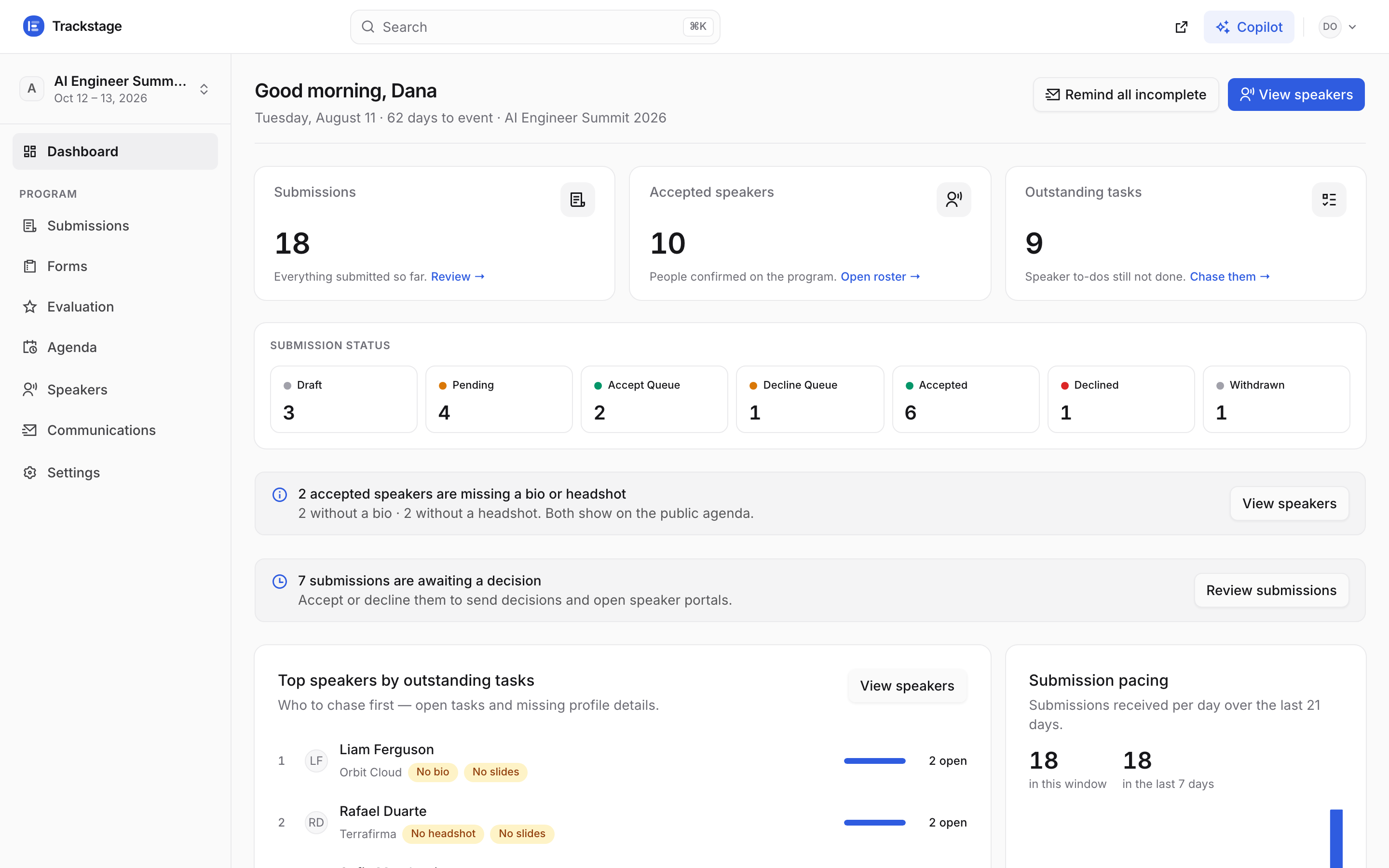
See it working, right now.
A real demo conference with real data in it. Open to anyone, nothing to install.
Attendee view: Browse the published program
Made for the people who run events
- Developer conferences
- Community meetups
- Company summits
- Academic symposia
- Hackathons
- User groups
- Workshop series
- Unconferences
The product
From first proposal to final schedule. All in one place.
Four jobs, one tool: collect the proposals, review and decide, build the agenda, and keep your speakers informed.
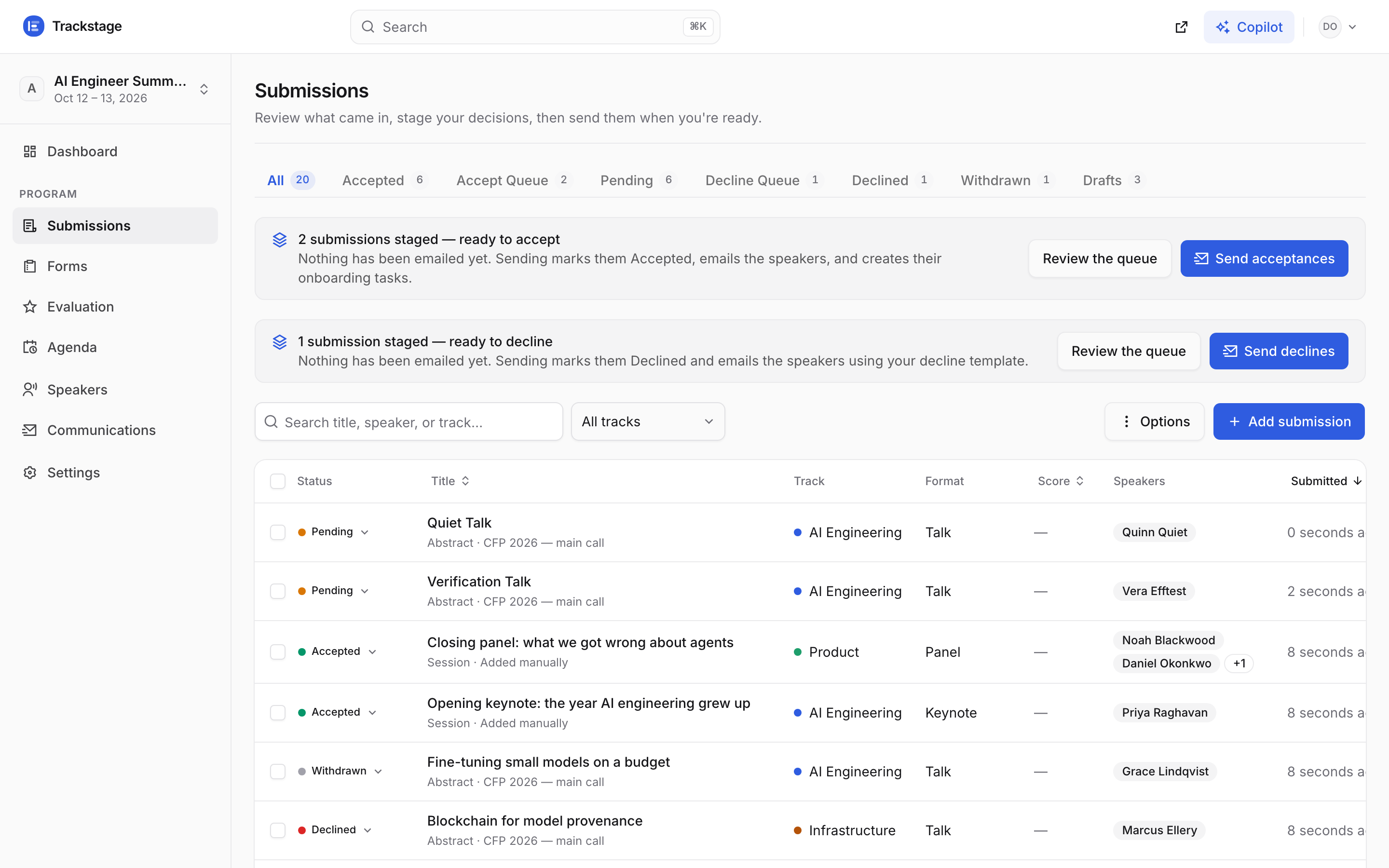
One public form. Every talk that comes in lands in one list, sorted by track.
Your reviewers score the talks. You accept or decline, then send the news.
Drag each talk into a room and a time. Double-bookings are flagged for you.
Ready-made emails send themselves, with the calendar invite attached.
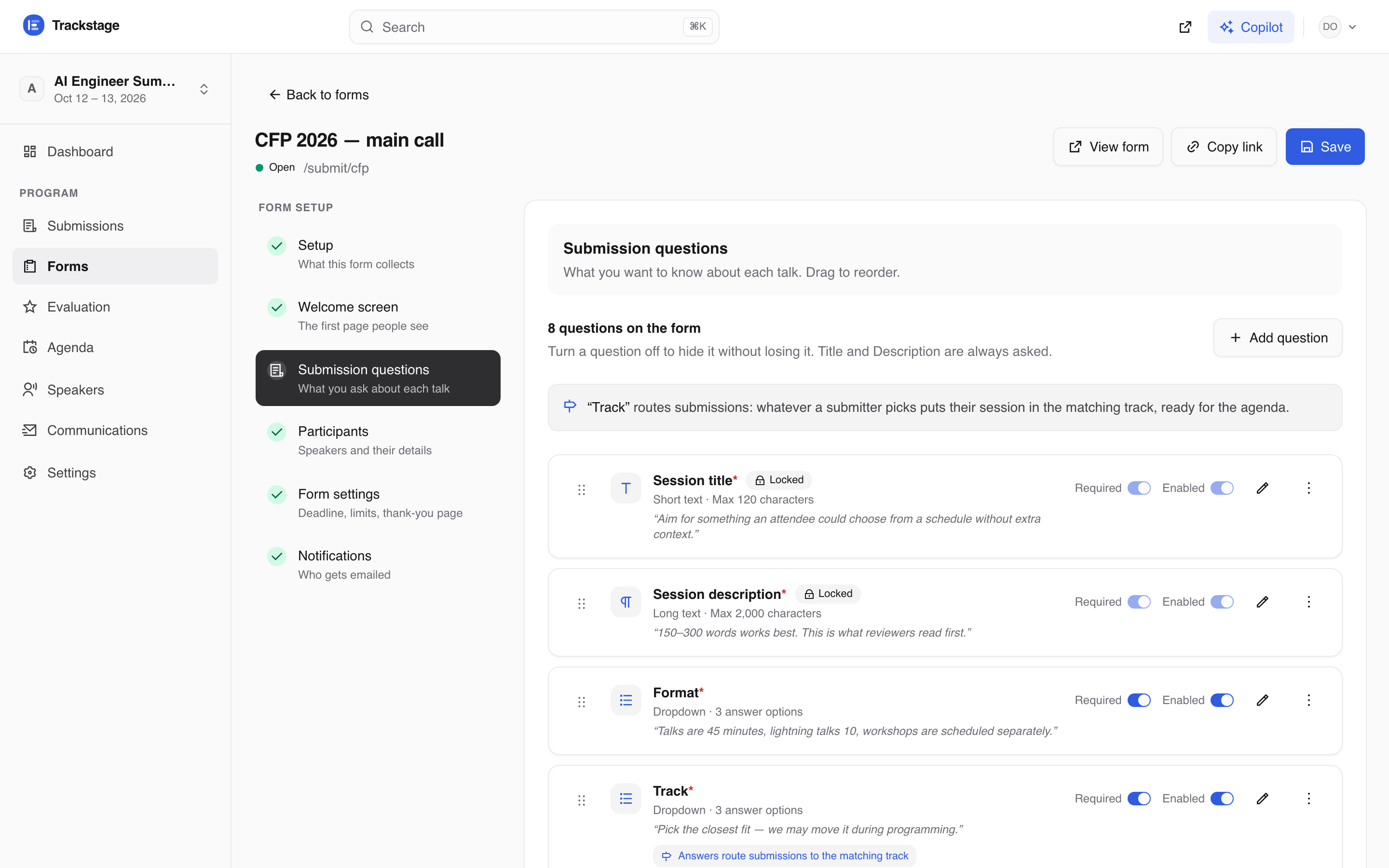
Form builder
Collect proposals with a form you build yourself
A step-by-step wizard writes your public submission form: your questions, your tracks, your deadline. Nothing to code, and you can change it after it's live.
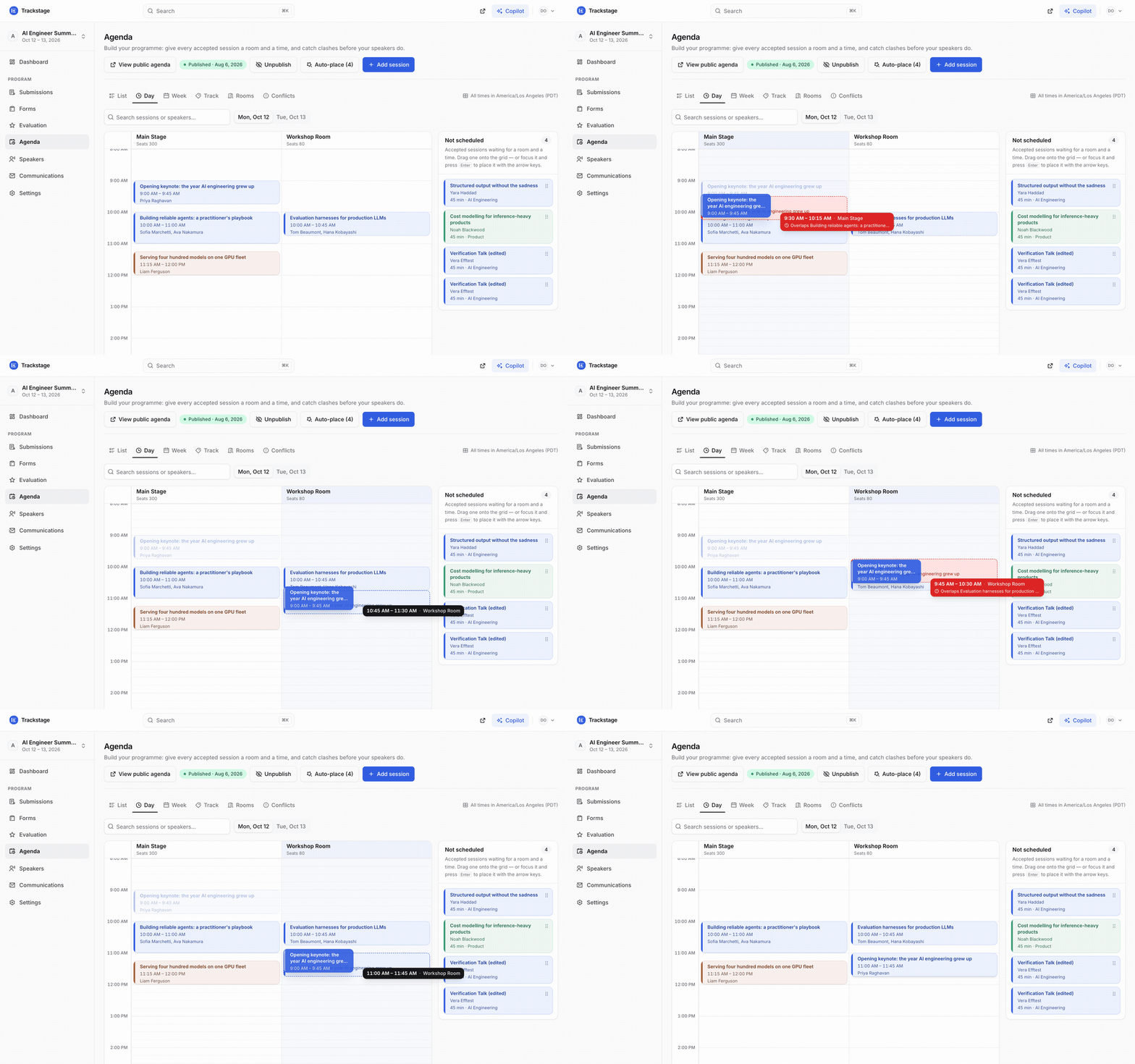
Agenda
Build the agenda by dragging talks into place
See the whole program by day, by room, or by conflict. Double-book a room or a speaker and it tells you the moment you drop the talk.
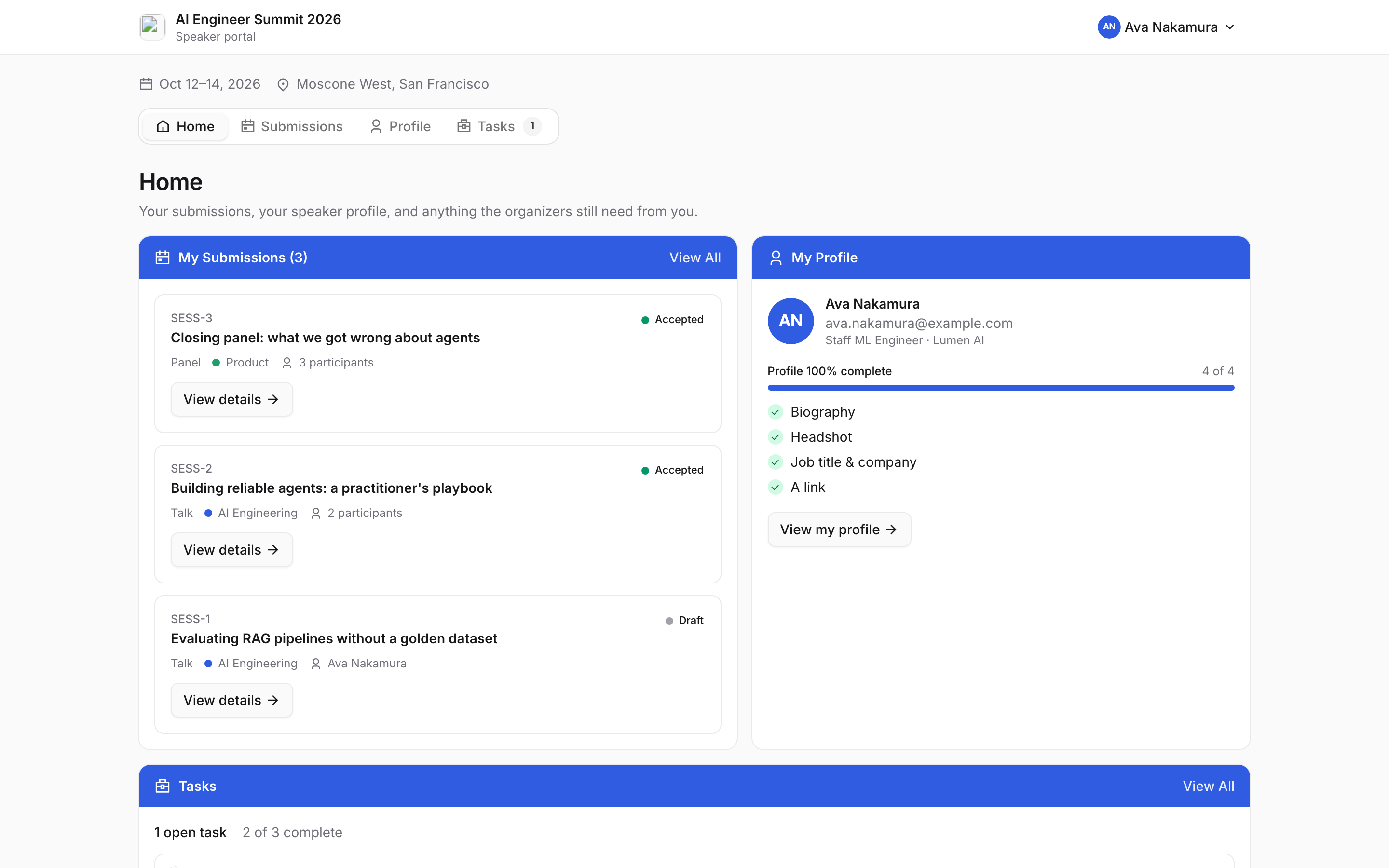
Speaker portal
Every speaker gets their own portal
One link, no password. Speakers see their talks, keep their bio and photo up to date, and work through a checklist of what you still need from them.
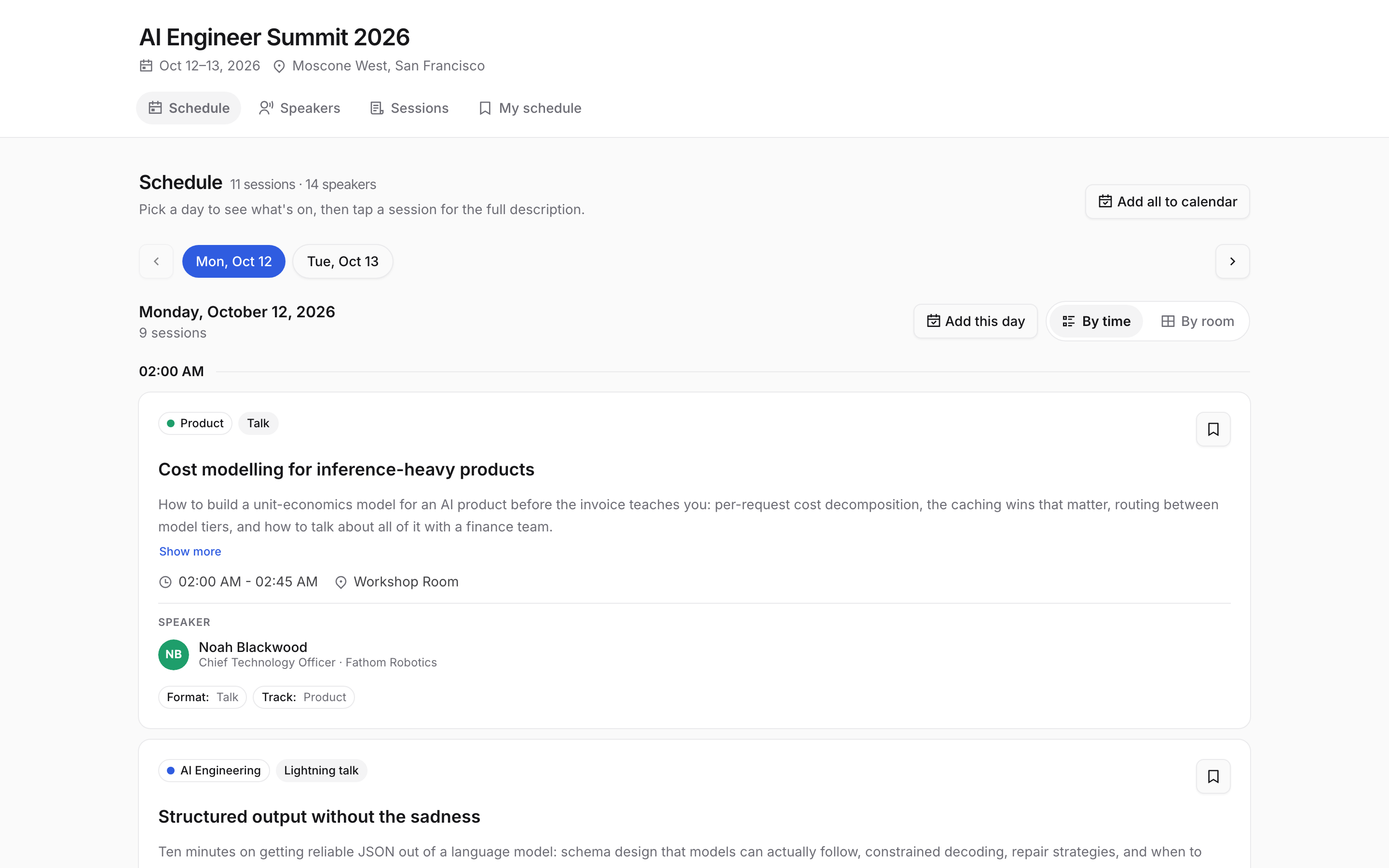
Public program
Publish the schedule when you're ready
A public program with a page for every talk and every speaker, a personal itinerary for each attendee, and calendar files that just work.
AI & developers
Ask an AI to run your event. Or plug it into your own website.
Connect Claude, ChatGPT or Codex to Trackstage and ask it to chase late speakers, schedule a talk or email everyone. Your website and your calendar can read the program too.
Connect Claude, ChatGPT or Codex and ask in plain English. 85 things it can do — and it asks you before it changes anything.
POST /mcpSubscribe to the whole program in Google or Apple Calendar. No key needed.
GET /v1/event/{slug}/schedule.icsPut the schedule on your own website. Talks, speakers and proposals as JSON.
GET /v1/event/{slug}/sessionsFoundations
The boring parts, done properly
Your whole team
Invite colleagues. Everyone works in one place.
Proper sign-in
Real accounts, team invites, password resets.
Many events, one place
Last year's, this year's, next year's.
Host it yourself
MIT licensed. Your servers, your rules.
Fast everywhere
Changes appear instantly, wherever your team is.
No jargon
Written for event organizers, not IT departments.
Free, either way
You get every feature whichever way you run it. No seats, no tiers, nobody to call.
Self-host
$0forever
Run the whole thing on your own servers. Download it and go.
- Every feature. There are no tiers.
- MIT licensed — fork it, rebrand it, keep it
- Your servers, your data
Cloud
Free while in beta$0while in beta
We host it for you. Sign up and run your event today.
- The same code as the repo, hosted for you
- Unlimited events, submissions and speakers
- No credit card, no sales call
Declare the winner
$10,000one time, voluntary
You know who you are. The prize has a Buy Now button — because of course it does.
- One time. Not a subscription.
- Bragging rights (non-transferable)
Open source, and yours to keep.
Software for running a call for papers has always been sold the same way. Tools like Sessionboard start with a sales call, cost five figures a year, and most teams use a fraction of what they pay for.
Trackstage does the same jobs, free and in the open — rebuilt to be simple enough to use without training, and fast enough that you never wait for it. The code, the design system and the build log are all public.
- MIT
- The whole product, no strings
- 100%
- Of the source, in the open
- $0
- Self-host or cloud beta
Ready to open your call for papers?
Try the demo first, then run your own event on exactly the same code. Free either way.